Can Your Cameras Detect Unsafe Behavior Before an Accident?
Scanalitix combines AI-powered video analytics, centralized monitoring, and coordinated response to help organizations identify unsafe behavior and act before incidents escalate.
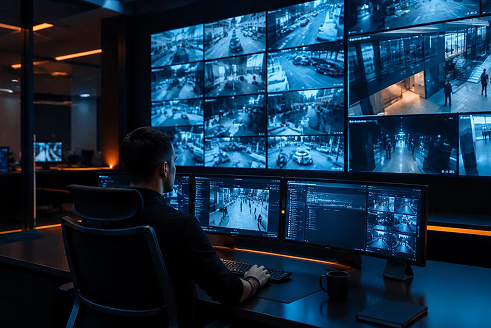
With AI-powered video analytics, cameras can do more than store footage. They can help detect conditions such as missing personal protective equipment, entry into restricted areas, unsafe proximity between people and vehicles, loitering, smoke, fire, and unusual activity. When these events are identified early and connected to a clear response process, video surveillance becomes a practical tool for proactive safety management.
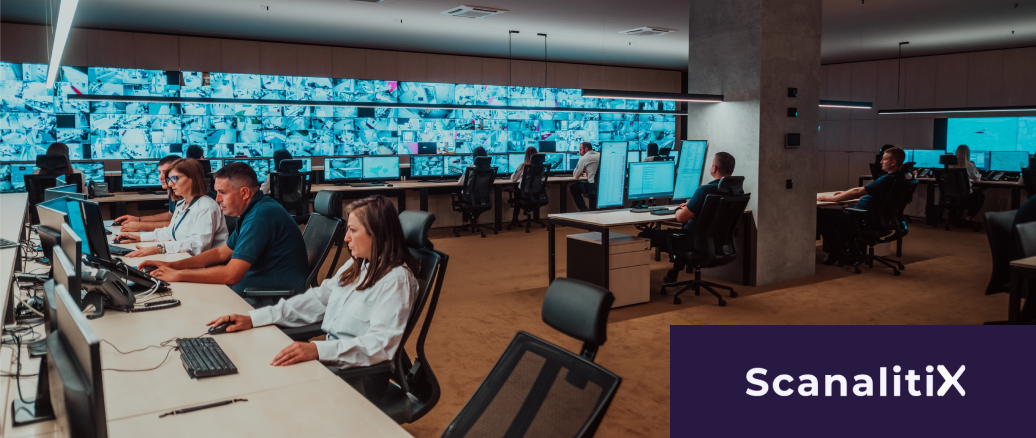
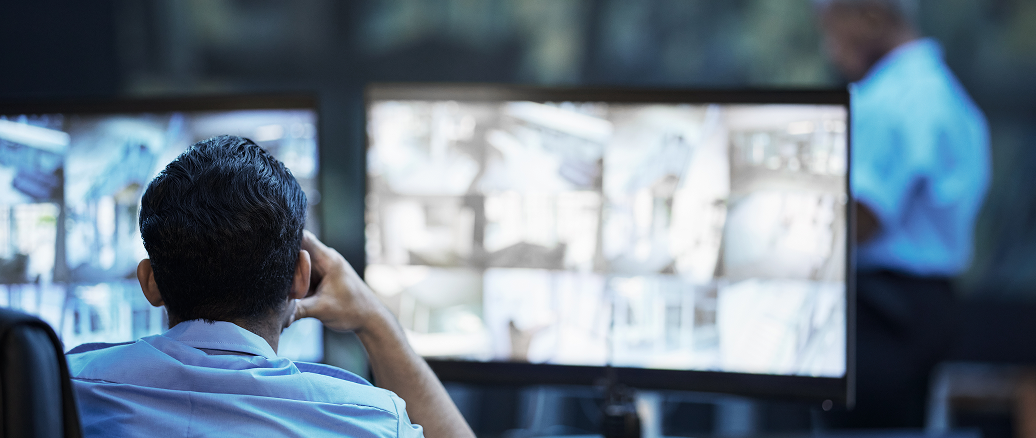
Scanalitix helps organizations combine video management, AI analytics, remote monitoring, and alarm verification to improve awareness across their sites. Its solutions are designed to help organizations receive alerts when unusual or potentially dangerous activity occurs, while trained monitoring personnel can review events and support the appropriate response.
AI cannot prevent every accident, and it should never replace safety training, engineering controls, inspections, or human judgment. However, it can help safety and security teams detect risks earlier, respond faster, and use real-world information to improve workplace conditions.
Why traditional surveillance is not enough
Traditional cameras remain useful. They provide evidence after an incident, help investigate disputes, support security operations, and allow teams to review events remotely.
The challenge is that conventional cameras usually depend on someone actively watching the screen or searching through recorded footage. This can be difficult when an organization operates:
- Multiple facilities.
- Large warehouses or outdoor yards.
- 24/7 shifts.
- Hundreds of cameras.
- Busy loading and unloading areas.
- Construction or manufacturing zones.
- High-traffic entrances and restricted areas.
Even experienced operators cannot give equal attention to every camera at every moment. A person may miss a brief safety violation, especially when several events happen simultaneously.
AI video analytics adds automated analysis to the surveillance process. Instead of treating every video frame equally, the system can be configured to look for specific events or conditions. When a defined rule is triggered, it can send an alert for review.
A typical workflow looks like this:
- A camera captures activity.
- AI analyzes the video feed.
- The system identifies a predefined event or anomaly.
- An alert is generated.
- A remote monitoring operator or authorized employee reviews the event.
- The appropriate person is notified.
- The event is documented and used for follow-up.
Scanalitix describes cloud-based video analytics that can identify anomalies and support real-time alerts, while its remote monitoring services are designed to provide continuous oversight and incident verification.
The value is not simply automation. It is the ability to direct human attention toward events that may require action.
What can AI video analytics detect?
The capabilities of an AI video system depend on the cameras, image quality, lighting, site layout, analytics configuration, and the use case. Organizations should select detection rules based on their actual risks rather than enabling every available feature.
Missing personal protective equipment
Personal protective equipment is essential in many workplaces. Depending on the environment, employees may be required to wear helmets, safety vests, gloves, eye protection, masks, or other equipment.
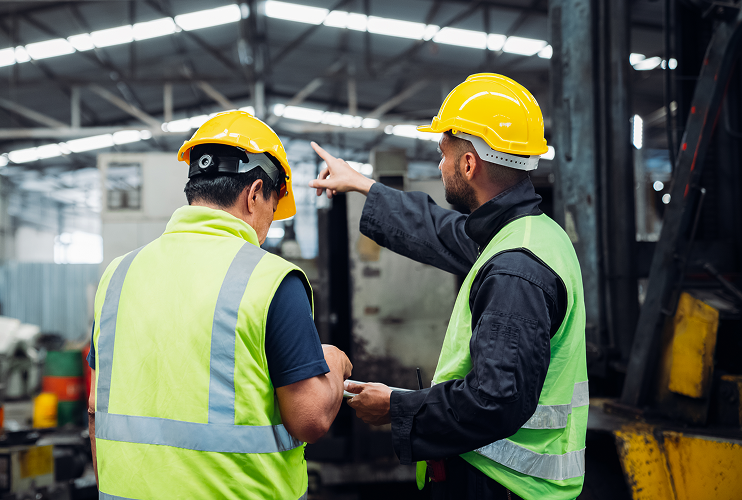
AI video analytics can help monitor PPE compliance in designated areas. For example, a system may flag a person entering a construction zone without a visible helmet or entering a high-visibility work area without the required vest.
This does not eliminate the need for training or supervision. Instead, it provides an additional layer of visibility. A manager may not be able to observe every entrance throughout an entire shift, but an analytics system can monitor selected access points and bring potential violations to attention.
PPE alerts can also reveal broader problems:
- Required equipment may not be available near the entrance.
- Employees may not understand which PPE applies to a specific zone.
- A particular shift may need additional supervision.
- Signage may be unclear.
- The work process may encourage employees to take shortcuts.
The objective should be correction and prevention—not simply counting violations.
Restricted-area entry
Restricted areas may contain machinery, electrical systems, chemicals, construction activity, or other hazards. Unauthorized entry can expose employees, contractors, visitors, and emergency responders to unnecessary risk.
AI analytics can monitor virtual boundaries and alert personnel when someone enters a designated zone. Rules may also be configured around time, direction, or dwell duration.
Potential applications include:
- Machinery rooms.
- Chemical storage areas.
- Active construction zones.
- Loading docks.
- Roof access points.
- Electrical rooms.
- Vehicle-only lanes.
- Perimeter areas after hours.
An alert can give a supervisor or monitoring operator an opportunity to intervene before the person reaches the hazard. Repeated alerts may also reveal a design problem. If employees regularly enter an unauthorized area because it is the shortest route to a workstation, management may need to improve the layout, install a barrier, or create a safer route.
People and vehicle proximity
Forklifts, trucks, cranes, and other vehicles create serious risks when they operate close to pedestrians. Painted lines and safety signs are useful, but they do not guarantee compliance in busy environments.
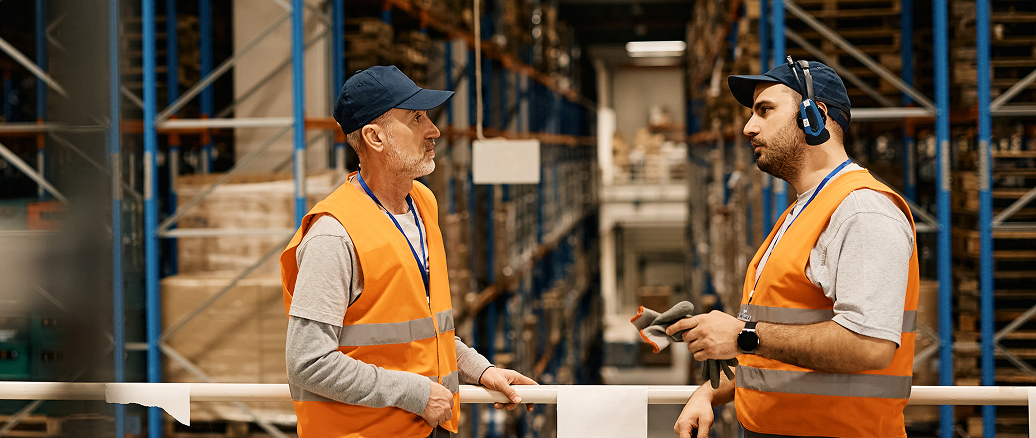
Video analytics can help monitor pedestrian and vehicle zones. A system may identify when a person enters a vehicle route, when a vehicle crosses a boundary, or when people and vehicles remain close together for a defined period.
This technology should support—not replace—physical separation, speed controls, operator training, traffic planning, and adequate lighting.
For a warehouse, useful questions may include:
- Where do most proximity alerts occur?
- Are incidents concentrated during shift changes?
- Are pedestrians using shortcuts?
- Is a loading area too congested?
- Are markings visible at night?
- Does a blind corner require improved camera coverage?
These insights can help organizations address the cause of unsafe behavior rather than responding only to individual events.
Loitering and unusual activity
A person remaining in a sensitive area may represent a safety, security, or operational concern. Loitering analytics can be useful around equipment rooms, storage areas, entrances, parking lots, yards, and property boundaries.
For example, the system may alert a monitoring team when someone remains near a restricted asset after hours or spends an unusual amount of time near a perimeter gate.
Context matters. An employee may be waiting for assistance, performing maintenance, or responding to an emergency. That is why alert verification is important.
Scanalitix identifies capabilities such as loitering detection, object detection, behavior analysis, and remote monitoring as components of modern video surveillance. These capabilities can help teams prioritize attention without requiring an operator to manually watch every location continuously.
Smoke, fire, and other hazards
Not every workplace hazard involves unsafe behavior. Smoke, fire, flooding, fallen objects, blocked exits, or damaged equipment can create danger even when employees are following procedures.
Video-based detection can provide another source of early warning in areas such as warehouses, yards, parking structures, and open facilities. An alert may help operators investigate a developing condition and activate the site's emergency procedure.
Technology alone is not an emergency plan. Organizations should define who verifies the alert, who contacts emergency services, how employees are evacuated, and how the event is documented.
How early alerts support prevention
Organizations often measure safety using lagging indicators, such as injuries, illnesses, property damage, lost-time incidents, and insurance claims. These measures are important, but they describe outcomes after something has gone wrong.
The Occupational Safety and Health Administration explains that leading indicators are proactive measures that help organizations identify whether safety activities are working and address problems before injuries or illnesses occur.
AI video analytics can support this approach by turning unsafe behaviors and near misses into measurable information.
Imagine a distribution center where a camera repeatedly detects pedestrians crossing a forklift lane. No collision has occurred, so the area may appear safe if management looks only at injury statistics.
However, repeated alerts indicate exposure to risk. The organization can investigate and discover that the approved pedestrian route becomes congested during shift changes. Employees cross the lane because the alternative route takes too long.
Management can then improve the layout, add barriers, change traffic patterns, or adjust shift scheduling. The goal is to reduce the conditions that create unsafe behavior.
In this example, the camera does not "predict" a collision. It identifies a warning pattern early enough for the organization to take preventive action.
Why human verification matters
AI video analytics is powerful, but it is not infallible. A system may generate a false alert because of:
- Poor lighting.
- Rain, snow, or glare.
- Camera vibration.
- Obstructions.
- Crowded scenes.
- Incorrect camera angles.
- Objects that resemble people or equipment.
- A rule that is too sensitive.
Human review helps determine whether an alert is genuine and what response is appropriate. Scanalitix describes a model in which alarms can be reviewed by remote monitoring personnel before intervention.
- Unauthorized.
- A trained technician.
- Performing scheduled maintenance.
- Responding to an emergency.
- Visible because the camera angle is incorrectly configured.
Automation can identify the event, but people provide context.
Human oversight also helps prevent alert fatigue. If employees receive too many irrelevant notifications, they may begin to ignore important ones. Analytics rules should therefore be tested, measured, and adjusted over time.
Privacy and responsible use
Any system that analyzes video of people should be deployed responsibly. Potential clients should evaluate not only what the technology can detect, but also how it will affect employees, visitors, and customers.
The National Institute of Standards and Technology's AI Risk Management Framework highlights the importance of trustworthy AI, including reliability, safety, transparency, accountability, privacy, security, and fairness.
Before implementation, organizations should establish:
- The specific safety purpose of the system.
- Which areas will be monitored.
- Who can view footage and alerts.
- How long information will be retained.
- How employees and visitors will be informed.
- How false alerts will be corrected.
- How performance will be reviewed.
- Which actions require human confirmation.
In many safety use cases, the system does not need to identify a person by name. It may be enough to detect that someone entered a hazardous zone or was missing required PPE. Limiting the system to the information needed for the safety objective can reduce unnecessary privacy concerns.
A responsible program should also make clear that analytics are used to improve workplace safety—not as the sole basis for disciplinary decisions.
How Scanalitix can support your safety strategy
Scanalitix offers an integrated approach that combines video management, cloud analytics, remote monitoring, and alarm verification.
For potential clients, the value is not just a camera dashboard. It is a process for turning video into actionable awareness:
- Existing camera feeds can be brought into a centralized monitoring environment.
- AI analytics can help identify defined behaviors, objects, and anomalies.
- Alerts can be reviewed by remote monitoring personnel.
- Relevant events can be escalated according to agreed procedures.
- Video can support investigation and incident documentation.
- Data from repeated events can help organizations identify patterns.
- Multi-site operations can gain more consistent visibility across locations.
Scanalitix also emphasizes a structured approach that includes defining project goals, designing the solution, implementing it with site personnel, and optimizing performance over time.
That implementation approach is important. Every facility has different risks. A construction site may need PPE and restricted-area detection. A warehouse may prioritize vehicle-pedestrian safety. A retail environment may focus on loitering, theft prevention, smoke detection, and after-hours activity.
The best configuration begins with the client's operational requirements—not with a generic list of features.
Questions to ask before choosing a solution
Potential clients should evaluate providers carefully. Useful questions include:
What specific risks can the system address?
Ask whether the platform supports the behaviors and hazards that matter at your facility. A solution should be selected around real operational problems.
Can it work with existing cameras?
Replacing every camera can increase cost and disruption. Ask which camera types, resolutions, network conditions, and recording systems are supported.
Who verifies alerts?
Understand whether alerts go directly to staff, a remote monitoring team, or both. Ask how false alerts are handled.
How are response procedures configured?
A useful system should connect detection to action. Clarify who receives alerts, how escalation works, and how events are documented.
How is performance measured?
Ask how the provider helps evaluate alert accuracy, response time, repeated risks, and safety outcomes.
What privacy controls are available?
Discuss access permissions, retention, notification, data security, and whether identity-based features are necessary for the use case.
Can the system scale?
If you operate multiple sites or expect to expand, consider centralized management, cloud access, integration options, and support for additional cameras and analytics.
A practical implementation roadmap
Organizations can reduce risk and improve adoption by taking a staged approach.
1. Identify priority hazards
Review incident records, near misses, safety inspections, employee feedback, and high-risk workflows. Select one or two use cases with measurable value.
2. Assess existing infrastructure
Evaluate camera placement, image quality, lighting, connectivity, storage, and coverage gaps.
3. Define alert and escalation rules
Decide what the system should detect, who should review alerts, and what action is expected.
4. Run a controlled pilot
Test the solution in a limited area. Measure detection quality, false alerts, response times, and employee feedback.
5. Improve the environment
Use the findings to address physical and procedural causes of unsafe behavior. Technology should lead to safer conditions, not merely more notifications.
6. Expand gradually
Once the pilot produces reliable results, extend the approach to additional zones, sites, or use cases.
Cameras are most valuable when they lead to action
The future of workplace safety is not about installing more cameras and hoping they solve every problem. It is about using information intelligently.
AI video analytics can help organizations identify missing PPE, restricted-area entry, unsafe vehicle interactions, loitering, smoke, fire, and other conditions that deserve attention. Remote monitoring can provide verification and support when internal teams cannot watch every site continuously.
Scanalitix helps bring these capabilities together through cloud video analytics, video management, remote monitoring, and alarm verification.
The technology should always work alongside safety professionals, employees, physical controls, training, inspections, and emergency procedures. It should also be implemented with privacy, transparency, and accountability in mind.
So, can your cameras detect unsafe behavior before an accident?
With the right analytics, configuration, monitoring process, and organizational response, they can help identify warning signs early. The real benefit comes when your team uses those warnings to correct hazards, improve workflows, and protect people before a near miss becomes an incident.
What Is Scanalitix?
Scanalitix is an AI-powered video intelligence and security platform that helps organizations turn live and recorded video into actionable insight. Built for enterprises, critical infrastructure, public-sector organizations, and complex multi-site operations, Scanalitix combines video management, AI analytics, incident response, command and control, and field service management in one connected platform. From detecting potential risks to coordinating teams and resolving incidents, Scanalitix gives security and operations teams the visibility and control they need to respond faster and work more effectively.