
Who Keeps Us Safe in a Crowd?
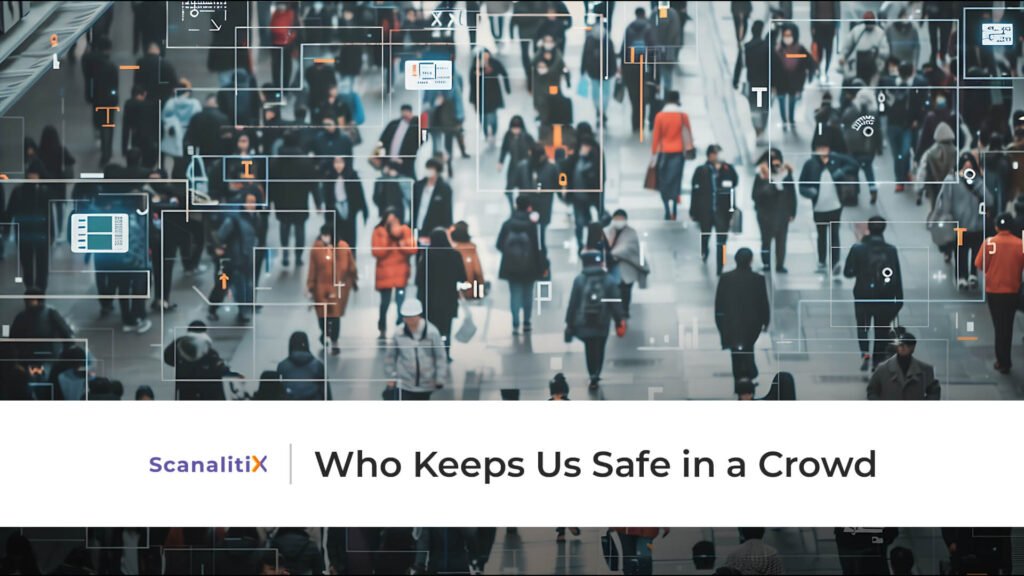
Table of Contents
Every November, the grounds of India Trade Promotion Organisation (ITPO) at Pragati Maidan transform into one of Delhi’s busiest hubs: the annual India International Trade Fair (IITF). Families roam through dozens of stalls, students browse exhibits, business visitors network, tourists explore. For two weeks, Pragati Maidan pulses like a living city.
But behind the festive bustle lies a serious logistical challenge. When thousands of people gather under one roof, safety, crowd flow, emergency readiness, lost-and-found, and smooth navigation become critical and difficult to manage purely with human vigilance. In such environments, one missed alert or delayed response can escalate into chaos.
That is why smart surveillance and video analytics matter. Modern systems do more than record: they interpret crowd behaviour, anticipate risk zones, trigger alerts, and guide response teams; sometimes before a problem becomes visible to human eyes.
In this blog, we explore how intelligent surveillance can transform crowd safety at ITPO-scale events and why more festivals, exhibitions, and public gatherings need to invest in video intelligence.
Crowds Are Living Systems, Treat Them Like One
Crowds do not behave uniformly. At events like IITF, visitor density fluctuates by hour, by entry gate, by hall, and by attraction. People converge toward popular stalls, rush to food courts at lunch, gather near entrances and toilets, or cluster where signage draws attention.
When large crowds move together, they behave much like a fluid, shifting direction, forming pressure points, expanding and compressing. Security challenges emerge in a matter of minutes: congested paths, blocked emergency exits, unattended baggage, lost children, medical emergencies, or simple missteps leading to panic.
Relying only on traditional CCTV and human guards becomes inadequate. Humans watching multiple video feeds simultaneously often lose focus. Research shows that as the number of screens increases, human attention and accuracy suffer drastically.
Smart video analytics changes that. By processing camera inputs with AI and machine learning, systems detect movement patterns, crowd density, abandoned objects, unusual behaviour, and hotspots, delivering actionable alerts immediately.
In effect, the crowd becomes a measurable, observable system and not just a sea of faces. Surveillance evolves from passive watching to active understanding.
What Smart Surveillance Looks Like at a Trade Fair
Imagine the Pragati Maidan premises equipped with modern video analytics tools. Here’s how event security could work if powered by real-time intelligence:
- Real-Time Crowd Density Mapping: Cameras feed video data into a processing engine. That engine estimates crowd density in each hall, corridor, gate, or open ground. System dashboards display live heatmaps like, green for safe zones, yellow for elevated traffic, red for overcrowding. When a hall approaches critical density, organisers receive immediate alerts. They can redirect newcomers to alternate zones, open more entry gates, or assign more manpower. Such crowd mapping works especially well at dynamic public spaces.
- Queue Monitoring and Flow Management: Trade fairs often suffer long queues, at entry points, food courts, washrooms, or registration desks. Smart surveillance tracks queue lengths in real time. If wait time crosses a threshold, the system flags it. Organisers can then open additional counters, guide people to alternate routes, or deploy staff to smooth flow. This reduces visitor frustration and minimises risk of overcrowding or stampede-like situations.
- Abandoned Object Detection & Unattended Bag Alerts: At large public gatherings, left-behind baggage or parcels are common security concerns. Video analytics can detect unattended objects by comparing movement trajectories. If an item remains static while surrounding motion disperses, the system raises an alert. Security staff then verify and act. This proactive detection beats human-only monitoring, which may miss brief windows of suspicious activity.
- Lost Person / Missing Child Assistance: In sprawling venues like ITPO, children or elders may wander off or get disoriented. With video analytics possibly augmented by consent-based facial recognition or simple movement tracking, staff can trace the person’s last known location. Tracking across multiple cameras helps guide them safely back to guardians. Many modern crowd-safety systems emphasise rapid identification and response to such situations.
- Real-Time Incident Detection (Health Emergencies, Distress, Crowd Behaviour): AI-based video analytics can flag unusual behaviour, like someone collapsing, crowd clustering suddenly, or aggressive movement. These triggers prompt instant alerts to medical or security teams, with precise location data. Early detection and quick response can prevent panic, injury, or worse.
- Post-Event Analytics & Planning: After the event, organisers can review data: busiest halls, peak entry times, queue patterns, common congestion points, incident hotspots. This helps improve layout planning, staffing, and safety protocols for future events. Video analytics thus transforms raw surveillance into actionable institutional knowledge.
Global & National Precedents Validate Smart Crowd Surveillance
What we propose for ITPO is not hypothetical. Around the world, large-scale events, expos, pilgrim gatherings, concerts and city festivals already deploy smart crowd-management surveillance.
- At international expos and trade shows such as Dubai Expo 2020, event organisers used automated video analytics systems to manage visitor flow and help prevent overcrowding, even under pandemic-era constraints.
- Recent academic research demonstrated that real-time crowd density estimation via CCTV and machine learning can effectively classify levels of crowding from moderate to dangerously dense and alert authorities when thresholds are crossed.
- Emerging frameworks like those described for pilgrim gatherings at large religious congregations highlight the role of computer-vision based crowd analytics for congestion detection, crowd size estimation, and safe dispersion planning.
- Industry analyses emphasise that video analytics enables safer crowd control, faster response to incidents, and better guest-experience management across concerts, festivals, fairs and other high-density events.
These precedents prove one thing: when crowds gather in numbers, surveillance without analytics is vulnerability.
Why ITPO/Pragati Maidan Events Must Embrace Video Intelligence
The scale and diversity of crowds at ITPO demand a robust crowd-management framework. Here’s why traditional CCTV alone won’t cut it and why video analytics offers a powerful upgrade:
- Scale & Complexity: With dozens of halls, multiple gates, open lawns, parking zones and constantly shifting footfall, manual video monitoring becomes impractical. AI handles scale without fatigue.
- Real-Time Responsiveness: Human operators review footage often after an incident. Analytics trigger alerts before events escalate.
- Consistency & Coverage: Cameras cover all angles; AI monitors continuously across feeds. No blind spots.
- Data-Driven Planning: Post-event analytics can help organisers improve layout, staffing, entry/exit planning and emergency protocols for future events.
- Visitor Experience & Safety Together: Smart crowd management avoids discomfort, long waits and confusion. It ensures safety without compromising enjoyment.
- Cost-Effective Risk Mitigation: One well-placed patrol or medical response triggered by early alert prevents bigger incidents. Over time, losses, liability, and damages reduce.
In short: video surveillance in crowd events should not only record, it must read, reason and react
The Technology Behind Smart Crowd Surveillance
Modern crowd-management video surveillance relies on several advanced technologies and frameworks:
- Video Content Analysis (VCA) / Video Analytics – algorithms analyse camera feed to detect objects, movement patterns, crowd density, suspicious behaviour, abandoned items, and more.
- Machine Learning / Deep Learning Models – convolutional neural networks (CNNs) help in crowd density estimation, detection of anomalies, behavioural recognition, and tracking.
- Real-Time Alert Systems & Dashboards – analytics feed into monitoring dashboards that translate data into actionable alerts for security staff, medical response teams, operations or crowd managers.
- Edge Processing & Central Monitoring – video analytics can run on local edge devices (for latency and bandwidth efficiency) or on central servers depending on scale.
- Integration with Emergency & Event Management Systems – cameras, access logs, PA systems, first-aid or event staff workflows tie together to enable coordinated response.
With these technologies working together, venues like Pragati Maidan can manage crowds proactively, not reactively.
Ethical Use, Privacy & Best Practices
Deploying powerful video analytics is not just a technical choice; it is a responsibility. Large public events must ensure:
- Transparency about surveillance zones – visitors should know where cameras operate.
- Data privacy – analytics should target behaviours, not personal profiling, unless explicitly permitted.
- Responsible storage and controlled access – video data should be securely stored and accessed only by authorised teams.
- Use case limitation – focus on safety, crowd management, lost children, emergencies; avoid misuse or intrusive profiling.
Successful implementations around the world balance safety and privacy through clear policies, consent mechanisms (where possible), and strict governance.
From Surveillance to Smart Crowd Management - What Scanalitix Brings
At Scanalitix, we believe large gatherings, whether trade fairs, concerts, exhibitions or pilgrim crowds deserve more than cameras. They deserve command-grade visibility, intelligence and response readiness.
Our unified platform merges:
- Video Management System (VMS) – centralized video ingestion from multiple cameras across halls, gates and outdoor zones.
- AI-Powered Video Analytics – real-time crowd density analysis, unusual-behaviour detection, unattended object alerts, queue monitoring, movement tracking.
- Central Monitoring System (CMS) – dashboards for live monitoring, alert management, incident triage and escalation workflows.
- Field Management System (FMS) – assigns tasks to on-ground staff, tracks response time, verifies resolution, logs actions for audit.
In effect, Scanalitix converts CCTV networks into living systems, where seeing becomes understanding, and video becomes actionable intelligence.
For ITPO-type events, this means: safer crowds, smoother flow, faster emergencies, better visitor experience, and smarter planning for future events.
The Bigger Picture - Safety, Experience, and Trust
Smart surveillance does more than prevent incidents. It builds trust. Visitors feel safer. Organisers gain confidence in operations. Vendors enjoy stable footfall. The city retains its reputation for hosting world-class fairs.
In a place like Pragati Maidan where tradition, commerce and culture meet, this trust matters. Safety should not come at the cost of experience, it should enhance it.
When video analytics and human response work in harmony, crowd events can become not just manageable, but memorable.
Large events, fairs, and exhibitions mirror the complexity of a city. They demand the kind of oversight, coordination, and rapid response that only real-time intelligence can deliver.
At the India International Trade Fair, where thousands converge under one roof, smart surveillance transforms chaos into control. It converts camera feeds into crowd intelligence. It turns silent halls into monitored zones. It transforms reactive security into proactive safety.
As crowds grow and expectations rise, relying solely on human monitoring becomes a risk. Investing in AI-powered video analytics and integrated monitoring is not optional. It is essential. With platforms like Scanalitix leading the way, event management can step confidently into the future, where safety, experience, and intelligence go hand in hand.