
ICCC at the Core: Reimagining Pilgrim Management Through AI

Overview
Managing a city that witnesses lakhs of visitors daily is not just an operational challenge-it’s a real-time decision-making problem. Traditional systems often fall short when scale, unpredictability, and safety intersect.
In one of India’s busiest pilgrimage cities, rising footfall began to strain traffic systems, public safety, and civic infrastructure. To address these challenges, city authorities moved toward a centralized, AI-driven approach with an Integrated Command and Control Center (ICCC).
Scanalitix, with its expertise in video analytics and unified monitoring platforms, aligns closely with this model, bringing together real-time intelligence, centralized visibility, and automated response systems to enable smarter, faster decision-making.
The Client
The client represents a high-density urban ecosystem, Tirupati, one of India’s most visited pilgrimage destinations. The city experiences massive daily footfall, which multiplies during peak seasons and festivals.
This dynamic environment demands continuous monitoring of traffic, crowd movement, utilities, and safety infrastructure, all while ensuring a seamless experience for pilgrims and residents alike.
The Challenge
As the city scaled, several operational challenges became increasingly complex:
- Massive and fluctuating crowd volumes are putting pressure on infrastructure
- Traffic congestion and mobility issues, especially during peak pilgrimage periods
- Limited real-time visibility across city operations
- Fragmented systems for surveillance, utilities, and emergency response
- Delayed incident response due to lack of centralized coordination
Traditional systems were largely reactive, making it difficult for authorities to anticipate issues or respond proactively.
The Solution
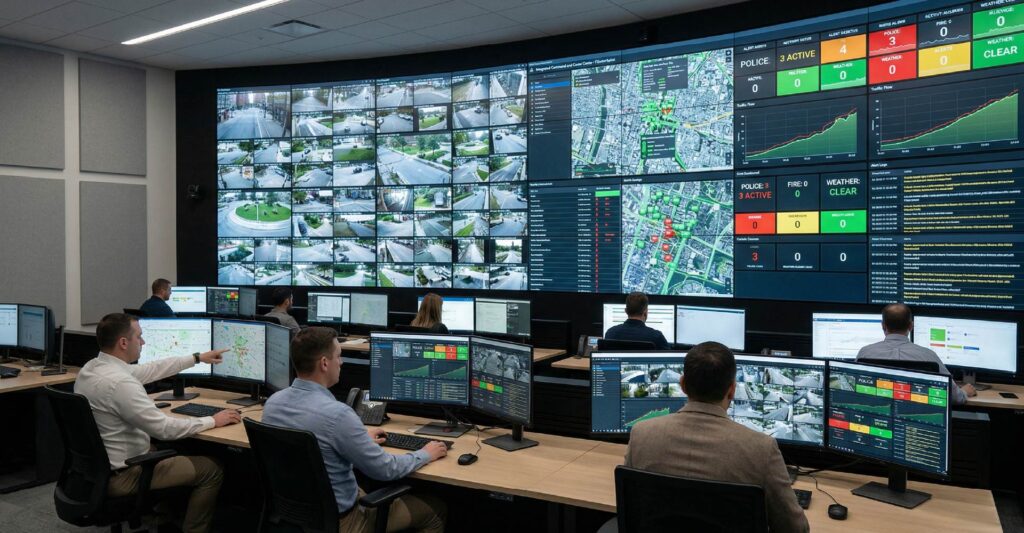
To address these challenges, an AI-powered Integrated Command and Control Center (ICCC) was introduced-serving as a centralized “brain” for city operations.
Aligned with Scanalitix capabilities, the solution focused on:
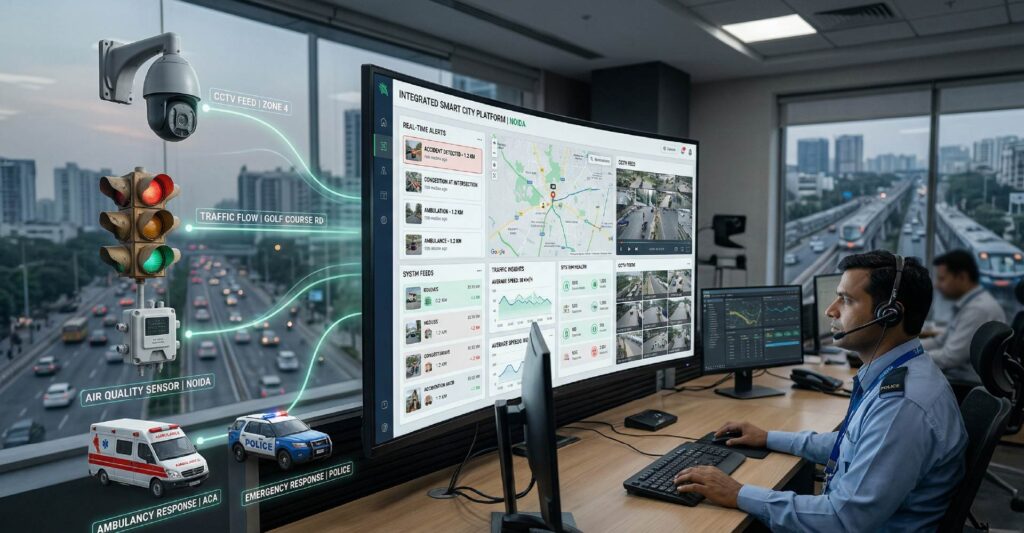
- Unified monitoring platform integrating CCTV, IoT sensors, and city systems
- AI-powered video analytics for real-time anomaly detection and crowd monitoring
- Centralized dashboards offering a 360-degree operational view
- Predictive insights for traffic flow, crowd density, and resource allocation
- Automated alerts and response mechanisms for faster decision-making
This transformation enabled a shift from reactive management to intelligent, data-driven urban governance.

Implementation
The ICCC was deployed as a centralized digital hub connecting multiple city systems:
- Integration of thousands of CCTV cameras and IoT devices into a unified platform
- Deployment of AI/ML models for real-time analytics and pattern detection
- Setup of 24×7 command center operations with live dashboards
- Enablement of cross-department coordination for traffic, utilities, and emergency services
- Continuous data ingestion and analysis for real-time insights and alerts
This phased rollout ensured scalability while maintaining uninterrupted city operations.
The Results
The implementation of ICCC capabilities delivered tangible improvements:
- Real-time visibility across city operations
- Faster and more coordinated emergency response times
- Improved traffic flow and congestion management
- Enhanced public safety through AI-driven surveillance
- Better resource allocation and operational efficiency
Cities adopting similar models globally have reported 20–30% faster emergency response times, reinforcing the impact of centralized command systems.
Business Impact
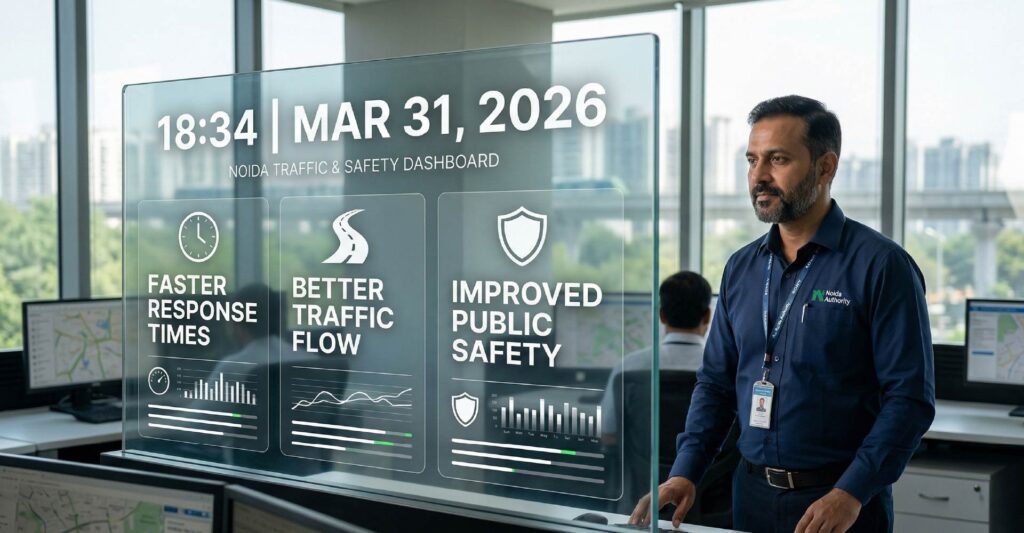
The transformation established a scalable foundation for smart city management. Authorities now benefit from improved situational awareness, faster decision-making, and more efficient resource utilization. For citizens and pilgrims, this translates into safer journeys, smoother mobility, and improved service delivery.
For Scanalitix, this model reflects its core value proposition, enabling organizations to move from fragmented monitoring to unified, intelligent, and proactive operations at scale.